 ultimate-guide
Factory Maintenance Schedule for Hybrids: A 2026 Guide
Table of Contents
- Understanding Your Factory Maintenance Schedule for Hybrids
- Hybrid Car Maintenance Schedule by Mileage: Key Service Intervals
- Hybrid Oil Change Interval: Engine Oil and Filter Maintenance
- Hybrid Battery Maintenance and Inspection: What Owners Must Know
- Hybrid Vehicle Service Checklist: Routine and Preventive Maintenance
- Plug-In Hybrid Versus Conventional Hybrid Schedules
- Severe Service Schedules and Real-World Driving Conditions
- Following Your Owner's Manual: Manufacturer Recommendations by Model
- Frequently Asked Questions
Last Updated: October 18, 2026
Understanding Your Factory Maintenance Schedule for Hybrids
A factory maintenance schedule for hybrids is a manufacturer-recommended timeline for routine service intervals, fluid checks, and inspections designed to keep your hybrid vehicle running reliably and efficiently.
At JM&H Automotive Inc., we specialize in hybrid vehicle care, and one thing stands out: most people don't realize their hybrid's maintenance schedule is fundamentally different from a traditional vehicle.
Your manufacturer provides specific guidance for your model year and powertrain.
Hybrid Car Maintenance Schedule by Mileage: Key Service Intervals
Your hybrid car maintenance schedule by mileage breaks down into predictable intervals. Most manufacturers recommend service at 5,000, 10,000, 15,000, 30,000, 60,000, and 90,000 miles, though some intervals may vary by model. These milestones ensure that critical components receive attention before wear becomes problematic.
The intervals serve a purpose: they're spaced to catch wear patterns, replace consumables before failure, and verify that hybrid-specific systems like the battery cooling system and regenerative braking components are functioning properly. Skipping intervals to save money now often costs far more later when a component fails unexpectedly.
5,000 to 10,000 Mile Service
Your first scheduled maintenance typically occurs at 5,000 miles, with another service due around 10,000 miles. At these early intervals, the focus is on engine oil and filter changes, tire rotation, and a multi-point vehicle inspection to verify everything is operating as designed.
Early maintenance catches manufacturing defects or assembly issues before they cause damage. Your technician will inspect brake pads for wear, check all fluid levels, examine hoses and connections, and verify that the regenerative braking system is functioning correctly.
15,000 to 30,000 Mile Service
At 15,000 miles, you'll typically have another oil change and tire rotation. By 30,000 miles, most manufacturers recommend a more comprehensive service that includes brake inspection, fluid top-offs, and a detailed check of the hybrid battery cooling system and high-voltage connections.
This is the point where early wear patterns become visible. Brake pads may show initial wear, and your technician can assess whether they'll make it to the 60,000-mile mark or need replacement sooner. The 30,000-mile service often includes an air filter check and cabin air filter replacement if needed.
60,000 Mile and Beyond
The 60,000-mile service marks a transition point in most factory maintenance schedules for hybrids. This is typically when spark plugs, transmission fluid, and engine air filters require replacement. Your hybrid battery inspection becomes more thorough at this interval, with diagnostic equipment checking the battery's state of charge, cell voltage, and cooling system performance.
After 60,000 miles, many manufacturers recommend services at 90,000 and 120,000 miles. These later intervals focus on brake system inspection, fluid replacements, and continued battery monitoring. Some hybrids may need transmission fluid replacement around 100,000 miles, depending on the manufacturer's specifications.
Hybrid Oil Change Interval: Engine Oil and Filter Maintenance
Your hybrid oil change interval typically falls between 5,000 and 10,000 miles, though some newer models allow 10,000-mile intervals.
The confusion often comes from the fact that hybrids don't run their gas engines as constantly as conventional vehicles. In city driving, the electric motor handles acceleration and low-speed operation, so the engine idles less and accumulates fewer miles of actual running time.
Use the oil grade and viscosity specified in your owner's manual. Most hybrids require synthetic or high-quality conventional oil, and using the wrong grade can affect fuel efficiency and engine performance.
Hybrid Battery Maintenance and Inspection: What Owners Must Know
Hybrid battery maintenance and inspection is the single most important aspect of hybrid ownership that differs from conventional vehicles.
Most hybrid batteries are warranted for 8 to 10 years or 100,000 to 150,000 miles, depending on the manufacturer. During this period, the battery gradually loses capacity, this is normal and expected.
High-Voltage System Safety
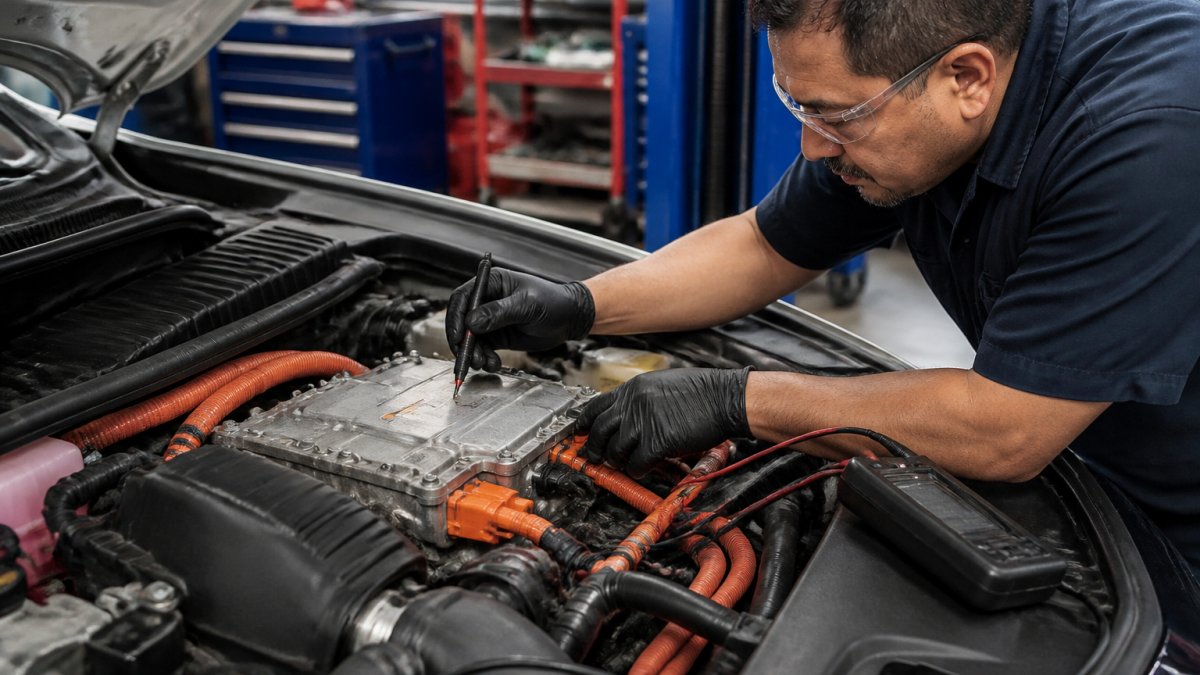
The high-voltage system in your hybrid requires specialized knowledge to inspect safely. The battery pack operates at 200 to 400 volts depending on the model, which is significantly higher than a conventional car's 12-volt system. Technicians working on the high-voltage system must be trained and certified to avoid electrical hazards.
At JM&H Automotive Inc., our team understands the safety protocols required for hybrid battery inspection. We use specialized diagnostic equipment to test the battery's voltage, cell balance, and thermal management.
Battery Cooling System Care
The battery cooling system is critical to battery longevity. Hybrids use a dedicated coolant loop that maintains the battery at an optimal temperature. If this system fails, the battery overheats, capacity degrades rapidly, and you may experience reduced power or limp-mode operation.
During your factory maintenance schedule for hybrids, the cooling system should be inspected for leaks, and the coolant condition should be verified. Some manufacturers recommend coolant flushes at specific intervals, typically 100,000 miles or every 5 to 7 years.
Hybrid Vehicle Service Checklist: Routine and Preventive Maintenance
A comprehensive hybrid vehicle service checklist goes beyond just oil changes. Your factory maintenance schedule for hybrids includes multiple components that require regular attention to ensure safety and reliability.
Tire Rotation, Alignment, and Brake Inspection
Tire rotation should occur every 5,000 to 10,000 miles, just as with conventional vehicles. Hybrids often experience uneven tire wear because the regenerative braking system applies braking force unevenly across the wheels. Rotating tires regularly distributes wear evenly and extends tire life.
Brake inspection is critical because regenerative braking changes how your braking system operates. The electric motor captures kinetic energy during braking, which reduces wear on traditional brake pads.
Tire alignment should be checked annually or whenever you notice uneven wear or steering drift. Proper alignment protects your tires and improves fuel efficiency.
Fluid Checks and Multi-Point Vehicle Inspections
Your hybrid requires regular checks of engine coolant, brake fluid, power steering fluid, and transmission fluid. Each fluid serves a specific purpose and degrades over time. A multi-point vehicle inspection examines belts, hoses, connections, battery terminals, and the overall electrical system.
During a thorough multi-point inspection, technicians should check:
- Engine air filter and cabin air filter condition
- Wiper blade wear and visibility
- Battery terminal corrosion and connection security
- Brake line integrity and fluid condition
- Coolant level and concentration
- Transmission fluid color and smell
- Drive belts for cracks or fraying
Plug-In Hybrid Versus Conventional Hybrid Schedules
Plug-in hybrid maintenance schedules differ slightly from conventional hybrids because plug-in hybrids have larger battery packs and charging systems.
Plug-in hybrids require the same factory maintenance schedule for hybrids regarding oil changes, brake inspections, and tire rotations. However, the battery cooling system becomes even more critical because the larger battery generates more heat.
If you own a plug-in hybrid and rarely drive long distances, your gas engine might run infrequently.
Severe Service Schedules and Real-World Driving Conditions
Not all driving is equal. If you frequently tow, drive in dusty conditions, make frequent short trips, or operate in extreme temperatures, your factory maintenance schedule for hybrids may need adjustment. Most manufacturers define "severe service" conditions that warrant more frequent maintenance.
Severe service typically includes:
- Frequent towing or hauling cargo
- Driving in dusty or sandy environments
- Making frequent short trips without reaching full engine operating temperature
- Operating in temperatures below freezing or above 90 degrees Fahrenheit
- Frequent idling or stop-and-go city driving
If your driving falls into these categories, your air filter may need replacement more frequently, your oil change interval might need to be shortened, and your transmission fluid may degrade faster. Ask your technician whether your driving patterns qualify as severe service, and adjust your maintenance schedule accordingly.
Following Your Owner's Manual: Manufacturer Recommendations by Model
Your owner's manual is the definitive source for your specific vehicle's factory maintenance schedule for hybrids.
Toyota Prius owners, for example, will find a different maintenance schedule than Honda Insight owners, even though both are conventional hybrids.
Your owner's manual specifies:
- Exact mileage and time intervals for each service
- The type and grade of fluids to use
- Tire pressure and rotation patterns
- Warranty coverage and what's included
- Special procedures for hybrid-specific systems
When you purchase a hybrid, keep your owner's manual accessible. If you've lost it, most manufacturers provide digital versions on their websites.
Following your factory maintenance schedule for hybrids ensures your vehicle stays reliable, maintains fuel efficiency, and protects the hybrid battery system that makes your vehicle unique.
Frequently Asked Questions
What is the recommended maintenance schedule for a hybrid car?
Most hybrid manufacturers recommend following their factory maintenance schedule, which typically includes oil changes every 5,000 to 10,000 miles, tire rotations every 5,000 to 7,500 miles, and multi-point inspections at regular intervals. Consult your owner's manual for the exact schedule for your hybrid vehicle model, as recommendations vary by manufacturer and driving conditions. Normal service schedules apply to most hybrids, though severe driving conditions may require more frequent service.
How often should a hybrid oil change interval occur?
Hybrid oil change intervals typically range from 5,000 to 10,000 miles, depending on the manufacturer and your driving habits. Many modern hybrids can go longer between oil changes than traditional vehicles because the engine runs less frequently. Always check your owner's manual for the exact hybrid oil change interval recommended for your specific model. Using the correct engine oil grade specified in your manual ensures optimal engine performance and fuel efficiency.
Do hybrid cars need special maintenance compared to traditional vehicles?
Hybrids require the same routine maintenance as conventional vehicles, oil changes, tire rotations, brake inspections, and fluid checks, but they also need specialized attention to the high-voltage battery system and regenerative braking components. The hybrid battery cooling system requires regular inspection to prevent overheating, and the high-voltage system demands professional diagnostics to ensure safety. Many dealerships and specialized shops have the training and equipment to handle hybrid-specific maintenance and repairs.
How often should a hybrid battery be inspected?
Most factory maintenance schedules recommend hybrid battery inspection every 30,000 to 50,000 miles, though some manufacturers suggest annual checks. Regular battery cooling system maintenance and visual inspections help catch issues early and extend battery lifespan. If warning lights appear on your dashboard related to the battery or high-voltage system, schedule an inspection immediately. Professional diagnostics can detect degradation before it affects vehicle performance or reliability.
Should I follow the factory maintenance schedule or a mechanic's recommendations?
Start with your factory maintenance schedule from the owner's manual, as it reflects the manufacturer's engineering specifications for your specific hybrid model. A qualified mechanic can recommend additional preventive maintenance based on your driving habits, local conditions, and vehicle history. If you drive in severe conditions, frequent short trips, towing, or dusty environments, your mechanic may suggest more frequent service intervals than the factory schedule. Always verify any recommendations against your owner's manual.
Do hybrid cars need brake service less often?
Yes, hybrid vehicles typically require less frequent brake service than traditional cars because regenerative braking captures energy when slowing down, reducing wear on brake pads. However, brake inspections are still essential to ensure the regenerative braking system functions properly and traditional brake components remain safe. Your factory maintenance schedule will specify brake inspection intervals, usually every 15,000 to 30,000 miles. Regular multi-point inspections catch brake fluid issues and pad wear early.
What should I include in my hybrid vehicle service checklist?
A comprehensive hybrid vehicle service checklist includes engine oil and filter changes, tire rotation and alignment, brake inspection and fluid checks, cabin and engine air filter replacement, coolant and transmission fluid checks, spark plug inspection, battery cooling system maintenance, and high-voltage system diagnostics. Multi-point vehicle inspections should verify all fluid levels, check warning lights, inspect belts and hoses, and test battery performance. Follow your owner's manual for the exact intervals and components specific to your hybrid model.