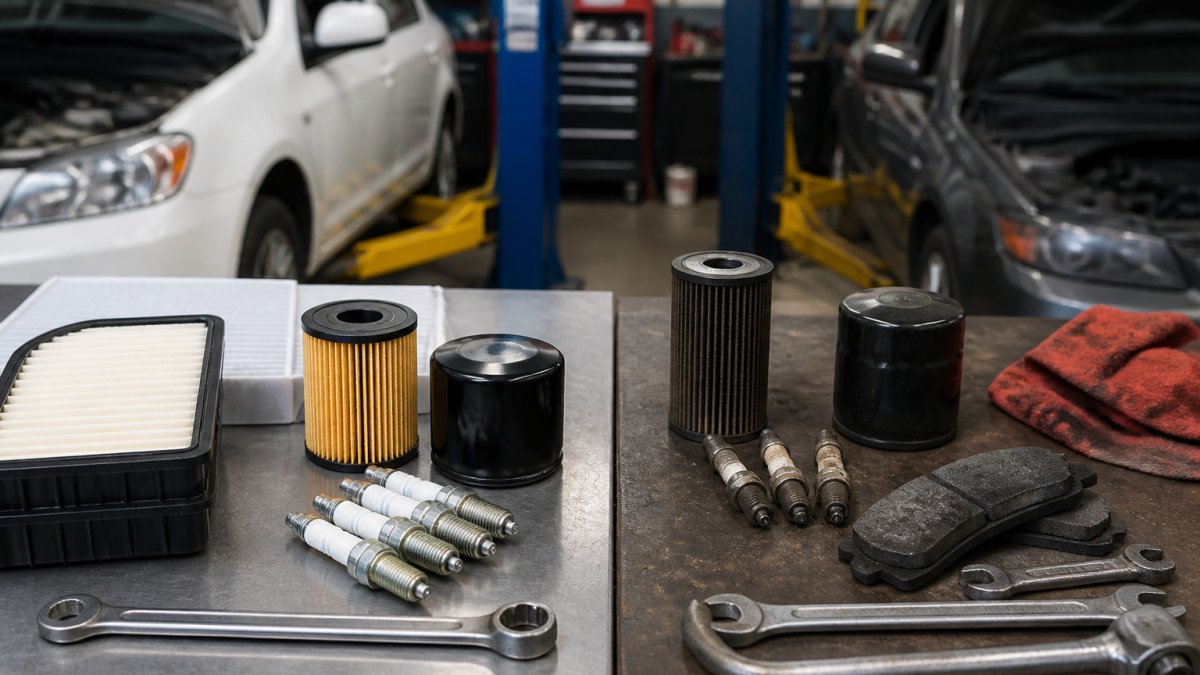
 comparison
Factory Maintenance vs Independent Shops: Which to Choose
Quick Summary
Dealerships offer brand-specific expertise and factory-trained technicians, while independent shops often deliver comparable factory maintenance at a lower cost with more personal service. For routine factory maintenance, a well-equipped independent shop with certified technicians can offer strong value.
- Dealerships generally carry higher labor rates than independent shops for the same published labor time.
- Ask whether a diagnostic fee is included or credited if you approve the repair.
- Under the Magnuson-Moss Warranty Act, independent maintenance generally does not automatically void your warranty.
- Keep receipts showing date, mileage, services performed and parts used.
- Use parts and fluids that meet the manufacturer's specifications, and ask shops to show the part number crosses to that specification.
Table of Contents
- Factory Maintenance vs Independent Shops: What Each One Offers
- Cost Differences Between Dealerships and Independent Shops
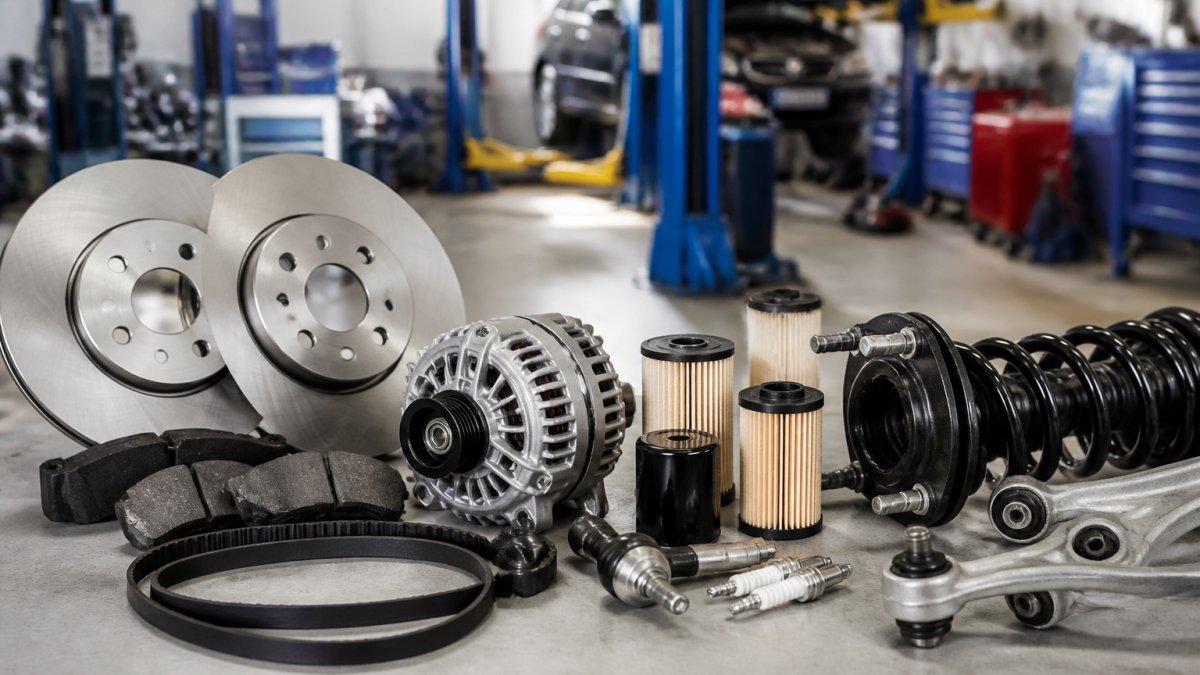
- OEM vs Aftermarket Parts for Routine Service
- Does Independent Maintenance Void Your Warranty? Magnuson-Moss Warranty Act Requirements
- Technician Training, Diagnostic Tools and Specialization
- Digital Vehicle Inspections and Service Records
- Choosing Your Next Service Visit for Your Vehicle
- Frequently Asked Questions
Factory Maintenance vs Independent Shops: What Each One Offers
Last Updated: October 30, 2026
Choosing between a dealership and an independent shop for factory maintenance is one of the most common decisions vehicle owners face. Drivers often ask this question when they want dealership-quality work without the dealership price tag.
Factory maintenance means following the service schedule the manufacturer publishes in the owner's manual. That covers oil changes, fluid checks, filter replacements, brake inspections and tire rotations at set mileage intervals.
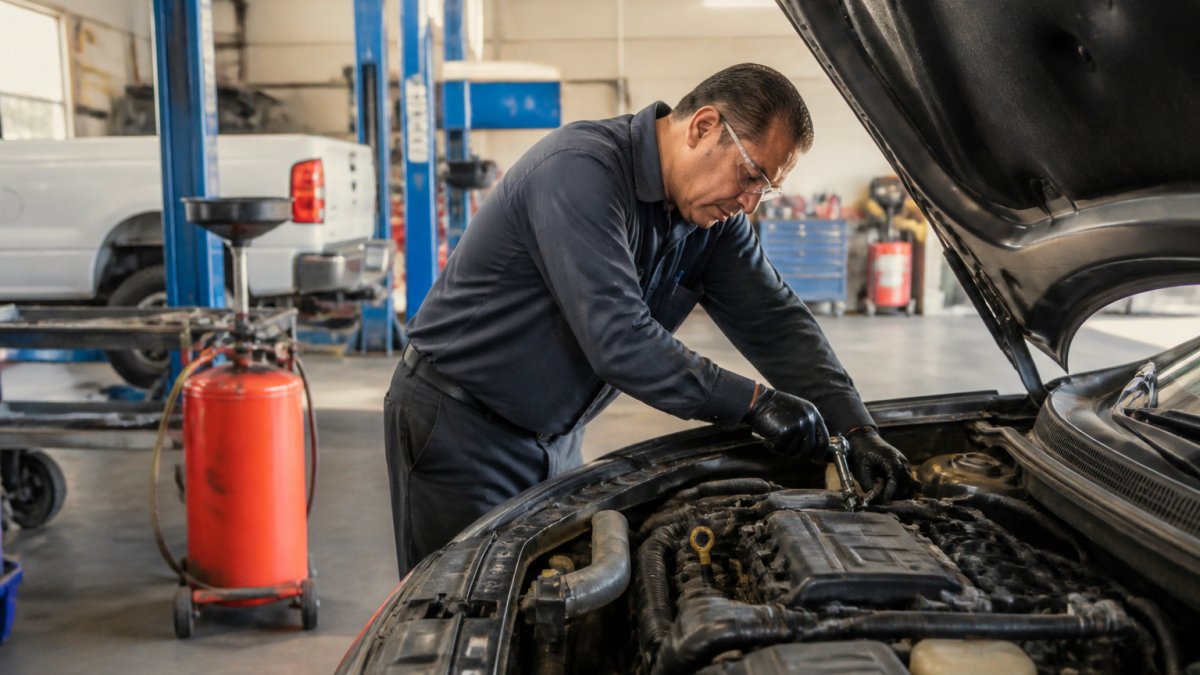
Dealerships employ factory-trained technicians and have direct access to manufacturer tools and updates. They are typically the most expensive option and may have longer wait times for appointments.
Independent shops work on many makes and models. Their strength is lower overhead, flexible parts choices and a closer relationship with the owner. The trade-off is that not every shop has the same depth of training on every brand.
Below, we compare costs, parts, warranty rules, technician credentials, digital records and the right way to pick your next service visit.
Cost Differences Between Dealerships and Independent Shops
The sticker price on an oil change is the least useful number in this comparison.
Labor rate. Dealerships generally carry higher labor rates than independent shops.
Diagnostic fees. Dealerships commonly charge a standalone diagnostic fee that may or may not be credited toward the repair if you approve the work.
Parts markup. Dealerships typically default to OEM parts with a standard markup. Independent shops can source OEM, OE-equivalent, or aftermarket parts, which gives you a lever to trade cost against specification.
Recommended vs. required work. This is where invoices diverge most. A dealership service advisor works from a menu of manufacturer-scheduled and condition-based recommendations; an independent shop may recommend a narrower or broader list depending on its inspection findings. Neither is automatically right.
A realistic way to compare two quotes:
- Confirm both quotes cover the same labor operation and the same part specification (OEM vs. OE-equivalent vs. aftermarket).
- Ask whether the diagnostic fee is included or credited.
- Ask whether shop supplies, disposal fees, and taxes are itemized.
- Ask what happens if additional work is found mid-job, is there a re-quote and approval step?
Over the life of a vehicle, the effect of labor rates on routine services adds up, but it is not the whole story. A cheaper oil change that comes with an incomplete inspection can cost more downstream than a pricier one that catches a failing component early. Judge cost against what the invoice actually includes, not against the headline number.
The table below sets out the four cost levers that separate a dealership invoice from an independent shop invoice.
| Cost lever | Dealership | Independent shop |
|---|---|---|
| Labor rate | Generally higher | Generally lower |
| Diagnostic fee | Standalone fee, may or may not be credited | Varies: waived, flat fee, or rolled into estimate |
| Parts sourcing | Defaults to OEM with standard markup | OEM, OE-equivalent, or aftermarket |
| Recommended work | Menu of scheduled and condition-based items | Narrower or broader depending on inspection |
OEM vs Aftermarket Parts for Routine Service
The OEM-versus-aftermarket debate is usually framed as a quality question. In practice it is a specification question, and the answer changes by component category. Getting the tiers straight is what lets you make a defensible choice instead of defaulting to whichever option the shop happens to stock.
The three tiers, defined:
- OEM (Original Equipment Manufacturer): The part is made by or for the vehicle manufacturer to its print specification and sold under the brand's parts label. Fit and material are controlled to the factory drawing.
- OE-equivalent (sometimes called OES or original equipment supplier): The part is made by the same supplier that builds the OEM part, often on the same line, but sold under the supplier's brand rather than the vehicle brand's label. Specification is typically identical; packaging and price are not.
- Aftermarket: The part is made by an independent company to its own interpretation of the specification. Quality ranges from excellent to poor, and the tier is not regulated, "aftermarket" tells you who made it, not how well.
Where the tier matters most:
- Safety and emissions systems, brake friction and hydraulic components, airbags and restraint sensors, catalytic converters, oxygen sensors. Specification drift here has safety and legal consequences, and OEM or OE-equivalent is the conservative choice.
- Electronics and ADAS, cameras, radar units, modules that require calibration after installation. A part that fits but cannot be calibrated to the vehicle is not a savings.
- Fluids and filters, engine oil, transmission fluid, coolant, cabin and engine air filters. Meeting the manufacturer's published specification (the viscosity grade, the fluid standard number in the owner's manual) matters more than the label on the bottle. Many quality aftermarket fluids and filters meet the same specification.
- Wear items, wiper blades, brake pads on non-performance vehicles, batteries. Aftermarket options in these categories are widely used and frequently perform comparably when they carry a recognized brand and the correct specification.
How parts choice interacts with your warranty. Under the Magnuson-Moss Warranty Act, a manufacturer generally cannot void your warranty simply because an aftermarket part was installed (the FTC). What it can do is deny a specific claim if it demonstrates that the aftermarket part caused the failure.
Questions that turn a parts debate into a decision:
- Which tier is this quote using, OEM, OE-equivalent, or aftermarket, and who makes it?
- Does the part meet the manufacturer's published specification for my vehicle?
- What warranty does the part itself carry, and who honors it, the shop or the part manufacturer?
- For this specific component, what is the trade-off if I choose the lower tier?
A shop that can answer those four questions is giving you a real choice. A shop that answers only "we use the good ones" is asking you to take the decision on faith.
Does Independent Maintenance Void Your Warranty? Magnuson-Moss Warranty Act Requirements
Many owners worry that servicing a car outside the dealership voids the factory warranty. Under the Magnuson-Moss Warranty Act, a federal law, a manufacturer generally cannot require that routine maintenance be performed at its dealership to keep the warranty in force. The manufacturer can, however, require that the work meet its published specifications and that you keep records showing the service was done.
Here is what that means in practice:
- You can have maintenance done at an independent shop without automatically losing warranty coverage.
- Keep receipts that show the date, mileage, services performed and parts used.
- Use parts and fluids that meet the manufacturer's specifications.
- A manufacturer can deny a claim if it proves that a non-approved repair or part caused the failure.
Confirm the details for your make and model in your owner's manual or with the manufacturer, because specific requirements vary. You can review the federal rules directly through the Federal Trade Commission guidance on the Magnuson-Moss Warranty Act.
Technician Training, Diagnostic Tools and Specialization
Technician training is one of the most important factors when choosing a shop. Dealership technicians receive manufacturer-specific training and have access to proprietary diagnostic software. That access matters most for newer models with complex electronics and software-controlled systems.
Independent shops differ widely. Many employ technicians certified through the National Institute for Automotive Service Excellence certification program, which covers a broad range of vehicle systems. Some independents also invest in manufacturer-level diagnostic equipment and training for popular brands.
When evaluating a shop, ask:
- Which certifications do your technicians hold?
- Do you have experience with my make and model?
- Can you access the diagnostic information my vehicle requires?
Specialization matters for hybrids and electric vehicles. These systems involve high-voltage components that require specific safety training and equipment. Confirm any shop's experience before booking hybrid or EV work.
Digital Vehicle Inspections and Service Records
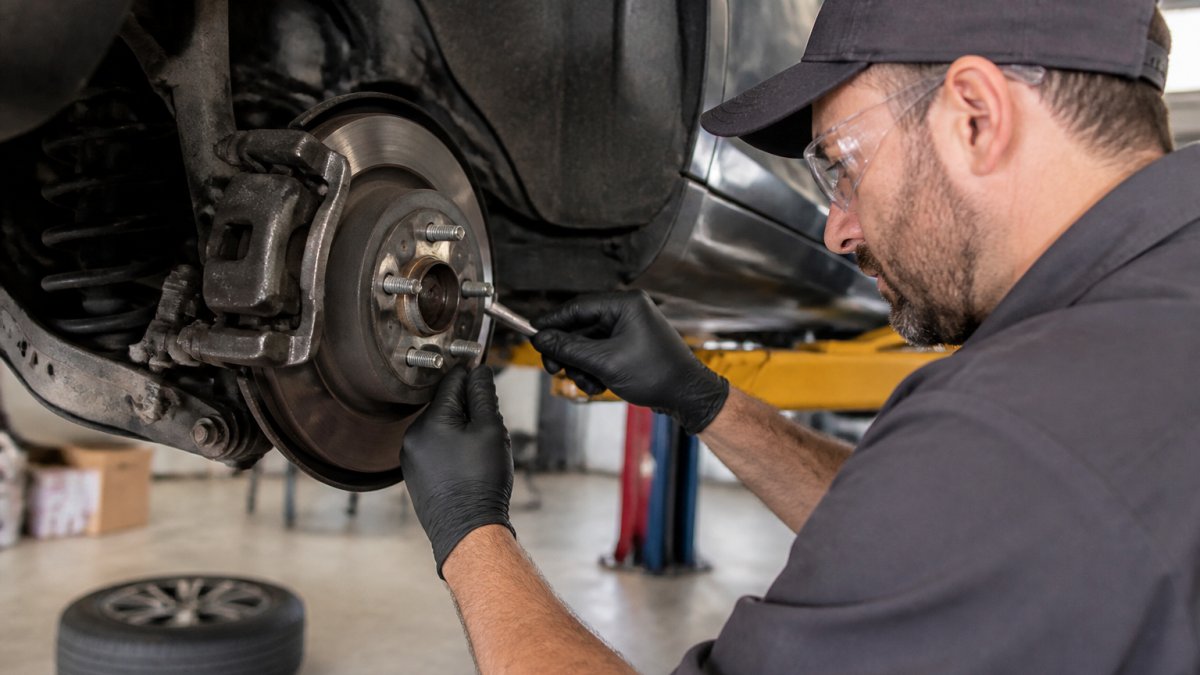
Digital vehicle inspections have become a standard way for shops to show owners what they found. Technicians document the condition of brakes, tires, fluids and other components with photos and notes, then share the report with the owner before any work is approved.
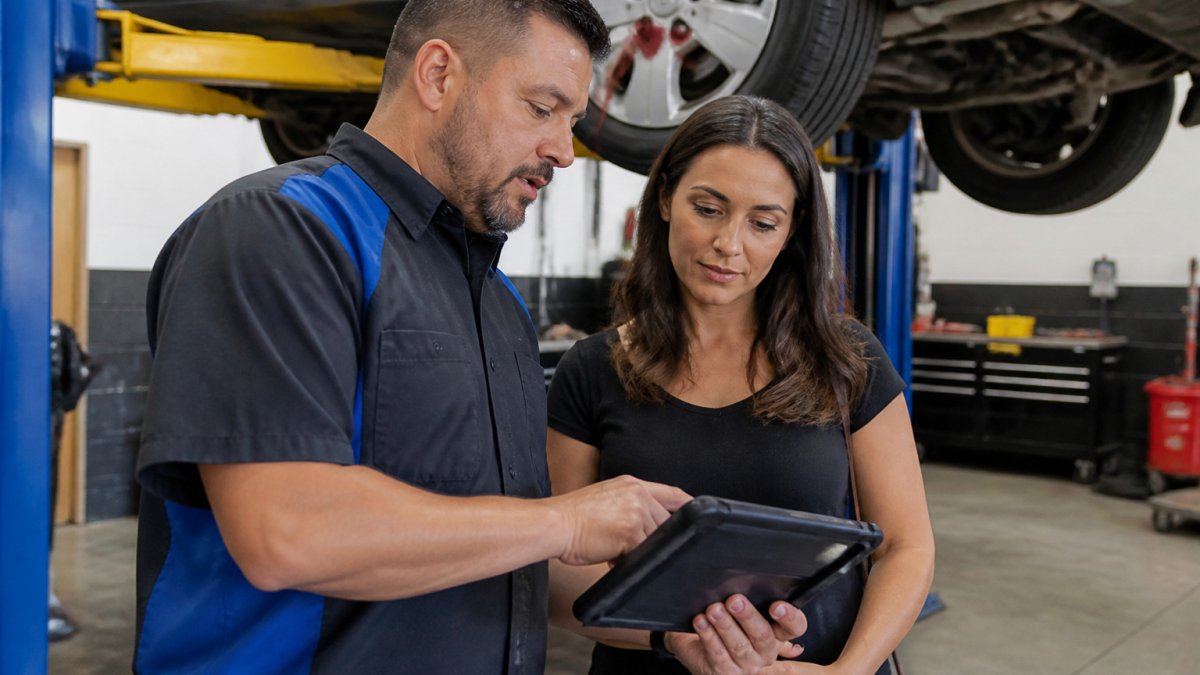
Digital inspections from JM&H Automotive Inc. come with photo evidence, so you can see the worn part for yourself.
Digital service records also make maintenance easier to track. A complete history helps with warranty claims, resale value and planning your next service. Ask any shop whether it provides electronic records you can keep.
Choosing Your Next Service Visit for Your Vehicle
The right choice depends on your vehicle, budget and priorities. Here is a simple framework:
- Check your warranty status. If your car is under factory warranty, review the manufacturer's maintenance requirements and keep detailed records.
- Compare estimates. Get written quotes from at least two shops for the same work.
- Confirm experience. Ask about certifications and experience with your make and model.
- Ask about parts. Find out whether the shop uses OEM or aftermarket parts and why.
- Look for transparency. Choose a shop that provides digital inspections and clear explanations.
For most routine factory maintenance, a well-equipped independent shop with certified technicians can offer strong value. For complex, brand-specific or warranty-dependent repairs, a dealership may be the better fit.
If you are weighing your options in Clovis, Fresno or Loma Vista, JM&H Automotive Inc. offers digital vehicle inspections with photo evidence. Schedule an appointment today to learn more about our family-owned shop, in operation for over 50 years.
Frequently Asked Questions
Does using an independent shop void my new car warranty?
No. Under the Magnuson-Moss Warranty Act, a manufacturer cannot require that routine maintenance be performed at a dealership to keep the warranty in force. You can use an independent shop as long as the work follows the manufacturer's maintenance schedule and you keep itemized records showing what was done, when and with which parts. The warranty can only be denied for a specific failure if the manufacturer proves the shop's work caused it. Keep receipts and inspection reports so you can prove the service was completed.
Is factory maintenance always more expensive at a dealership?
Not always, but dealerships usually charge higher labor rates than independent shops, and that gap shows up on most routine jobs such as oil changes, brake service and fluid replacement. Pricing depends on your vehicle, the parts used and the services required, so the only reliable comparison is a written estimate from each shop. Ask for itemized quotes covering labor hours, parts and any diagnostic fees before you decide. For current pricing, contact JM&H Automotive Inc. directly for a quote.
Do independent shops have access to the same diagnostic tools as dealerships?
Many independent shops use professional scan tools that read most manufacturer codes and run standard diagnostics. Some proprietary functions, such as certain module programming or software updates for specific makes, may still require manufacturer-level access. A good independent shop will tell you upfront if a job needs equipment it does not have. Ask whether the technicians hold ASE certification and what diagnostic equipment the shop uses before booking a complex repair.
Are OEM parts required for factory maintenance?
No single rule requires OEM parts for every routine service. Factory maintenance schedules specify service intervals and fluid types, and many independent shops use OEM parts, OEM-equivalent parts or high-quality aftermarket parts that meet the same specifications. The Magnuson-Moss Warranty Act generally prevents a manufacturer from forcing you to use only its brand of parts, but it can deny coverage for damage directly caused by a non-conforming part. Ask the shop which parts it uses and whether they meet manufacturer specifications.