 how-to
After-Hours Auto Repair Drop-Off: A Complete Guide
Table of Contents
- Why After-Hours Auto Repair Drop-Off Matters for Busy Vehicle Owners
- Before You Arrive: Preparing Your Vehicle for After-Hours Drop-Off
- Using an Auto Repair Shop Key Drop Box Safely
- What to Include in a Car Repair Drop-Off Note
- Car Service Appointment Drop-Off Checklist
- Repair Shop After-Hours Vehicle Pickup: What to Expect
- Security, Liability, and Insurance During After-Hours Drop-Off
- Communicating with Your Repair Shop After Drop-Off
- Frequently Asked Questions
Last Updated: October 14, 2026
Why After-Hours Auto Repair Drop-Off Matters for Busy Vehicle Owners
After-hours auto repair drop-off has become essential for vehicle owners who can't take time off work. Busy professionals, commuters, and families in the Clovis area need repair shops that fit their schedules.
At JM&H Automotive Inc., convenience matters as much as quality.
The challenge is doing it safely. A proper after-hours drop-off protects your vehicle, your keys, and your personal information while keeping the repair moving forward.
Before You Arrive: Preparing Your Vehicle for After-Hours Drop-Off
Preparation makes the difference between a smooth drop-off and confusion later. Take 10 minutes before you arrive.
Clean out personal items.
Check your fuel level.
Document your vehicle's condition. Photograph existing dents, scratches, or worn spots as proof of what was there before.
Know what needs repair.
Bring all keys that operate the vehicle, including fobs and backup keys. Leave everything the shop might need.
Using an Auto Repair Shop Key Drop Box Safely
A secure key drop box is the standard mechanism for after-hours drop-off, and the point where most problems start. Understanding how it works, and what to do when it doesn't, separates a clean drop-off from an unwanted morning phone call.
How a Key Drop Box Actually Works
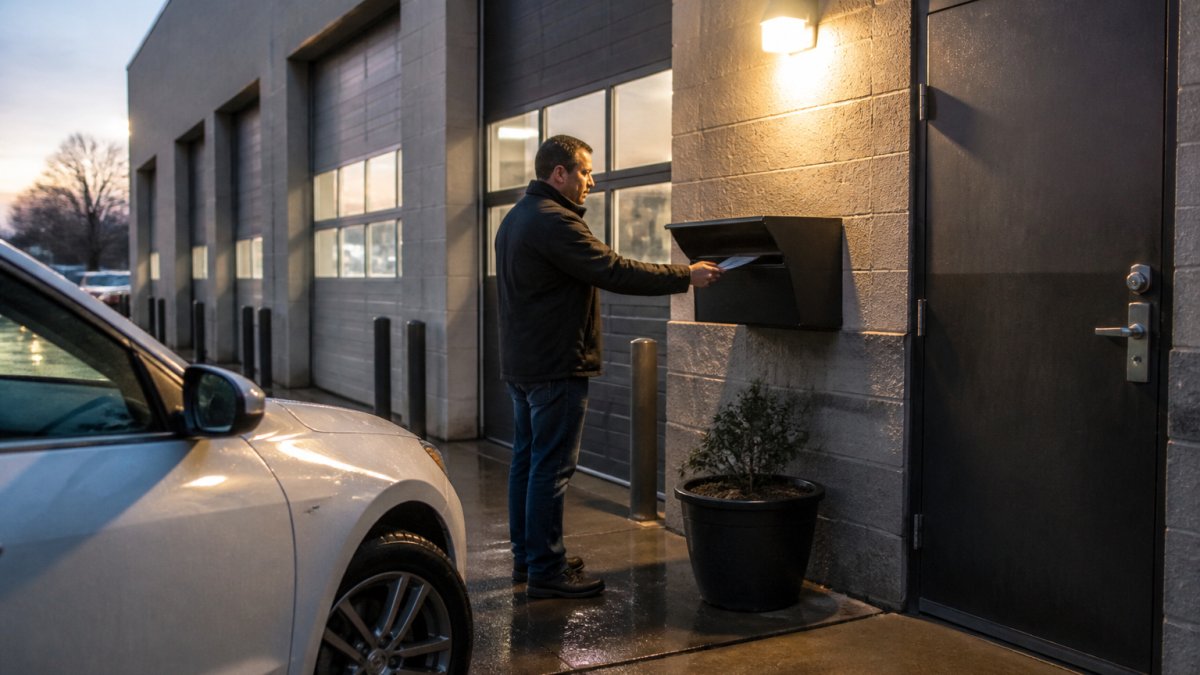
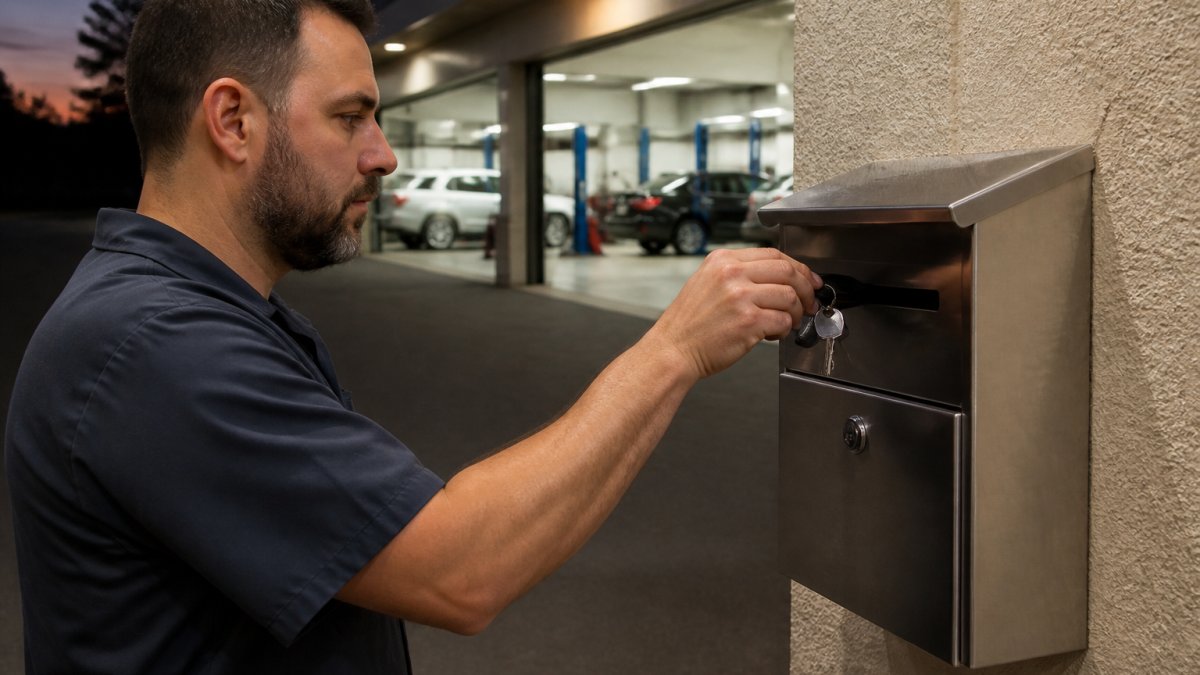
Most exterior boxes are a single-chute design: lift a hinged door, drop the keys through, and release it. A spring-loaded flap closes behind them, and the chute empties into a locked interior compartment staff open from inside.
Some shops pair an outer key chute with a separate locked slot for paperwork; others use a wall-mounted safe with numbered compartments. If compartments are numbered, write yours on the drop-off note so staff can match keys to the right vehicle.
Before You Drop the Keys
- Confirm the box belongs to the shop, not a neighboring business, boxes on shared walls or in strip-center breezeways are easy to confuse.
- Check that the chute is empty and the flap closes, so rain, snow, or debris stays out.
- Look for a posted notice with the shop's name, hours, and phone number. If there's no signage, call the shop's main line before leaving anything.
Packaging the Keys So They Survive the Night
Place keys in a sealed envelope or zip-top bag.
For keyless-entry fobs, wrap the fob in bubble wrap or a padded envelope before sealing it, fobs are shock-sensitive, and one cracked in a metal chute can cost more than the repair itself.
Leave only what operates the vehicle. Registration, insurance cards, garage-door openers, house keys, and valet tags belong on the drop-off form or in your pocket.
What to Do If the Box Is Missing or Locked
If there is no box, or it's locked in a way you can't open, don't improvise. Options, in order of preference:
- Call the shop's main number and listen to the after-hours message, many shops list a cell or text line for exactly this situation.
- Use the shop's online booking or contact form to send your name, vehicle, and a photo of where you parked.
- Park in a well-lit spot the shop designates for after-hours vehicles, lock the vehicle, keep the keys, and return when the shop opens.
Never leave the vehicle unlocked with keys inside or the engine running, both create liability problems for you and the shop.
Matching Keys to the Right Vehicle
Shops with multiple after-hours vehicles rely on the information you leave. "Keys in box" forces staff to guess; "2016 Honda CR-V, silver, plate 7ABC123, keys in envelope in box, parked in space 4" lets the service writer pull the right file before a technician touches a car. Include the parking spot number or a landmark whenever the lot is large.
What to Include in a Car Repair Drop-Off Note
A clear drop-off note is your communication lifeline.
Describe the problem in detail.
Note any keys or fobs you're leaving.
Leave your preferred contact method, phone, email, or text, and say if you'd rather not be called at work.
Write legibly in black or blue pen. A technician rushing through paperwork might misread sloppy writing.
Include the date and time you dropped off the vehicle to create a record if questions arise later.
Car Service Appointment Drop-Off Checklist
Use this checklist before leaving your vehicle for after-hours drop-off.
| Item | Status | Notes |
|---|---|---|
| Remove personal items and valuables | ☐ | Documents, electronics, valuables |
| Fuel level adequate (1/4 tank or more) | ☐ | Check gauge before arrival |
| Take photos of vehicle condition | ☐ | Front, back, sides, and any damage |
| Prepare drop-off note with problem description | ☐ | Specific details, not vague complaints |
| Gather all keys and fobs for the vehicle | ☐ | Include backups and spare keys |
| Place keys in envelope with your name | ☐ | Write clearly on outside |
| Verify key drop box is clean and working | ☐ | Test lock before using |
| Confirm shop hours and pickup availability | ☐ | Know when you can retrieve the car |
| Leave insurance and registration info | ☐ | With drop-off note, not in key box |
| Provide preferred contact method | ☐ | Phone, email, or text |
| Verify shop has your vehicle description | ☐ | Make, model, color, license plate |
| Ask about authorization limits | ☐ | What costs require your approval |
Review this list before you arrive. A thorough drop-off prevents problems later.
Repair Shop After-Hours Vehicle Pickup: What to Expect
Picking up your vehicle after hours requires planning too.
Ask about the pickup process. Some shops leave the car in a designated spot.
Review the repair invoice and ask about anything unclear.
Keep your receipt and documentation filed safely.
Ask about the warranty on the repair work, most shops stand behind it for 30 days or longer.
If you're paying after hours, confirm accepted payment methods, cards, checks, or cash, before you arrive.
Security, Liability, and Insurance During After-Hours Drop-Off
This is the part of after-hours drop-off that matters most if something goes wrong: how responsibility, coverage, and authorization typically work, and what to confirm in writing before you hand over the keys.
When Responsibility Transfers to the Shop
Responsibility does not transfer the moment you pull into the lot. In most states a repair shop is a bailee, someone temporarily holding your property, and the duty of care generally begins when the shop takes possession of the vehicle and keys. Practically:
- Before you drop the keys, the vehicle is your responsibility, even on the shop's lot.
- Once the keys are in the shop's control (in the box, office, or handed to staff), the shop owes you a reasonable duty of care.
- The scope of that duty depends on state law and on the shop's posted signs, work order, or drop-off agreement.
Garagekeepers Coverage vs. Your Own Auto Policy
Reputable shops carry a commercial auto policy with garagekeepers coverage, the part that responds when a customer's vehicle is damaged while in the shop's care, custody, or control, such as a tech backing into a lift, a fire in the bay, or a theft from a locked lot.
Your own auto policy usually follows the vehicle. If the shop's coverage applies, your insurer may pay first and then seek reimbursement from the shop's insurer (subrogation).
What to confirm before drop-off:
- Does the shop carry garagekeepers coverage, and what is the per-vehicle limit?
- Does the shop's policy cover theft and vandalism, or only damage caused by shop operations?
- Will the shop provide a certificate of insurance on request?
A shop that cannot answer these questions is a shop to avoid for overnight drop-off.
Documenting Condition and Mileage
Photos and a mileage reading are your cheapest insurance. Before you leave the vehicle:
- Photograph all four corners, the roof, the windshield, and the odometer with the ignition on.
- Photograph existing damage close-up, with something for scale.
- Note the mileage on the drop-off form and in your own records, plus the fuel level.
Most shops won't accept responsibility for personal property left inside a vehicle. If you must leave something, list it on the drop-off form and ask the service writer to initial it.
Authorization Limits and How They Affect Liability
An authorization limit is the dollar amount above which the shop must call you before doing additional work. It protects you from surprise charges and the shop from unpaid work.
Put your limit in writing on the drop-off note, for example: "Do not perform any work exceeding $400 without my written or verbal approval." If the shop's standard limit is higher than you want, say so explicitly, and state any hard ceiling too.
Overnight Security Questions Worth Asking
When you call to arrange the drop-off, ask:
- Is the lot fenced, gated, or monitored by camera?
- Are vehicles left outside, or moved into a locked bay overnight?
- Who has access to the lot after hours?
A shop that describes its overnight routine in specific terms, cameras, gates, morning walk-arounds, has thought about this. Vague answers are a signal.
If Something Goes Wrong
If you discover damage, theft, or missing property after pickup:
- Don't drive away if the damage affects safety. Photograph everything on the lot.
- Notify the shop in writing the same day, with photos and the mileage at drop-off and pickup.
- File a claim with your own insurer if the shop disputes responsibility; your insurer can pursue the shop's insurer.
- Keep the drop-off note, work order, invoice, and all photos together.
Most disputes resolve quickly when the customer has a timestamped drop-off record and a written authorization limit. Without those, it becomes one person's word against another's.
Communicating with Your Repair Shop After Drop-Off
Clear communication after drop-off prevents misunderstandings. Set expectations upfront.
Confirm the shop's communication plan: will they call, email, or text, and how often?
Ask about authorization requirements. If repairs cost more than expected, will they call you first?
Discuss timeline expectations.
Ask how you'll receive the final bill, ready at pickup, emailed beforehand, or discussed by phone.
Leave your contact information clearly.
After-hours auto repair drop-off works best when both you and the shop communicate clearly.
Frequently Asked Questions
What should I do before dropping off my car for service?
Remove personal items, valuables, and important documents from your vehicle. Clean out the trunk, glove compartment, and cup holders. Note the current mileage and fuel level, and take photos of your vehicle's condition. Write a detailed drop-off note explaining the issue, maintenance history, and any special instructions. Confirm the repair shop accepts after-hours drop-off and verify their business hours and service appointment availability before you arrive.
How does an auto repair shop key drop box work?
A key drop box is a secure, locked container mounted outside the repair shop where you can leave your vehicle keys after business hours. Place your keys in an envelope with your drop-off form and vehicle information, then insert the envelope into the box. The shop retrieves your keys the next business day and begins work on your vehicle. This method provides security and convenience for customers who cannot visit during regular service hours.
What information should I leave with my car when I drop it off?
Include your full name, phone number, email address, and preferred contact method on your drop-off form. Describe the vehicle issue clearly, note any warning lights or symptoms, and mention the current mileage. List any special requests, allergies, or accessibility needs. Include your vehicle's VIN, make, model, and year. If you have service history or warranty information, attach copies. Leave authorization limits for repair costs so the shop knows when to contact you before proceeding.
What happens if my vehicle has an urgent or safety issue after I drop it off?
If the shop discovers a safety concern like brake failure, electrical hazards, or structural damage during inspection, they will contact you immediately using the phone number on your drop-off form. Provide clear, daytime contact information and specify an emergency number if needed. Be prepared to authorize repairs or discuss next steps quickly. Some shops may hold the vehicle if repairs are unsafe to delay, so maintaining open communication after drop-off is critical for urgent situations.