 how-to
What Does Check Engine Light Mean? A Driver's Guide
Table of Contents
- What the Check Engine Light Actually Means
- The Most Common Reasons the Light Comes On
- Can You Drive With Check Engine Light On?
- How a Check Engine Light Diagnostic Scan Works
- What Repairs Typically Cost and Why the Light Returns
- Resetting the Light After a Repair
- When to Hand It to a Professional
- Frequently Asked Questions
Last Updated: October 13, 2026
What the Check Engine Light Actually Means
The check engine light is your car's way of telling you the engine control unit found something it doesn't like.
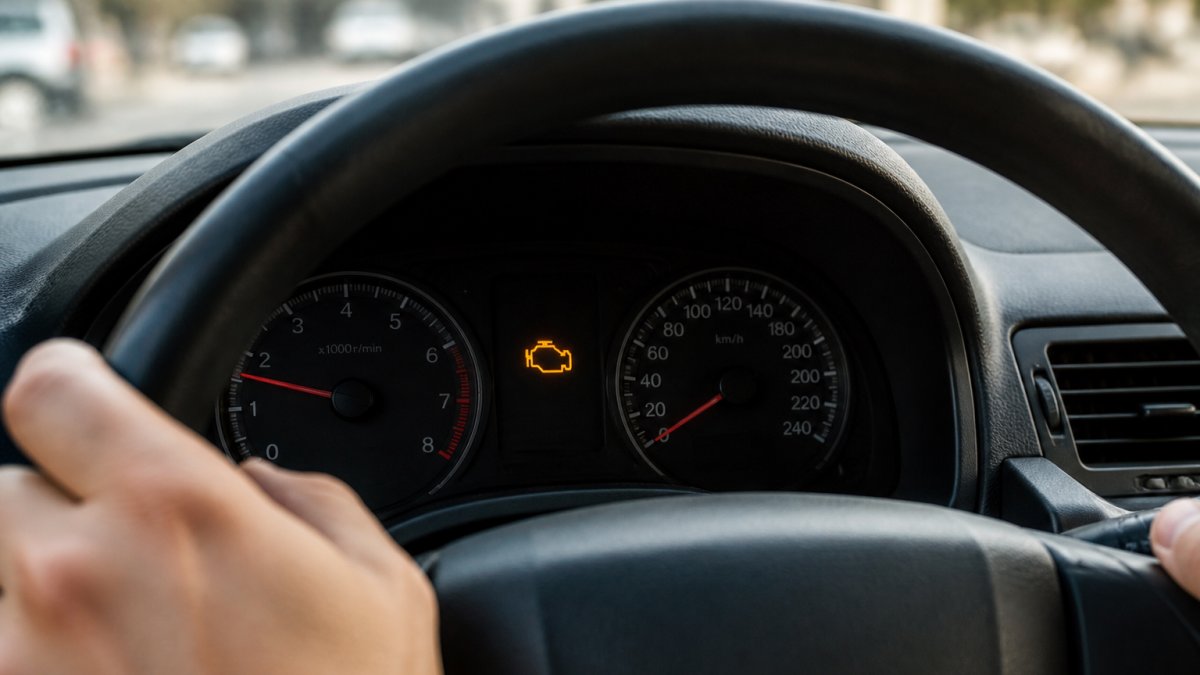
The check engine light is a dashboard warning that signals your engine control unit (ECU) has logged a fault in one of the systems it monitors. Those systems include the fuel system, ignition, emissions controls, and transmission.
Here's the part most drivers miss: the light doesn't measure how bad the problem is. A loose gas cap and a failing catalytic converter can trigger the exact same light.
Solid Light vs. Check Engine Light Flashing
A solid light means something is wrong, but you can usually keep driving carefully. A check engine light flashing means stop now. A flashing light almost always points to an active engine misfire, which dumps raw fuel into your exhaust and can destroy your catalytic converter in minutes. If the light is blinking, pull over and call for help.
The Most Common Reasons the Light Comes On
The most common cause is a loose or faulty gas cap. It sounds too simple to be true, but a bad seal lets fuel vapor escape, and the emissions system flags it immediately. Other frequent triggers include a failing oxygen sensor, a dirty mass airflow sensor, worn spark plugs, bad ignition coils, or a vacuum leak.
Check Engine Light After a Gas Cap Issue
A check engine light after a gas cap issue is the best-case scenario. Tighten the cap until it clicks, then drive for a few days. Many cars clear the light on their own after a few start-and-stop cycles. If it stays on after a week, the problem is somewhere else.
Can You Drive With Check Engine Light On?
You can drive with a solid check engine light on, but only if the car feels normal. No strange noises, no shaking, no loss of power. If you notice any of those, stop driving and get it checked.
Can you drive with check engine light on when it's flashing? No. A flashing light means active damage is happening. Towing is cheaper than a new catalytic converter.
Watch for these warning signs that mean pull over now:
- The light is flashing, not steady
- The engine is misfiring or shaking
- You smell fuel or burning
- The temperature gauge is climbing
- Power drops when you press the gas
How a Check Engine Light Diagnostic Scan Works
A check engine light diagnostic scan reads the trouble codes your ECU stored when it flagged the problem. A scan tool plugs into the OBD-II port under your dashboard, usually within arm's reach of the steering wheel. The tool pulls diagnostic trouble codes (DTCs) that narrow down which system failed.
Reading Diagnostic Trouble Codes Yourself
You can read codes yourself with a basic OBD-II scanner. Here's how:
- Find the OBD-II port under the dash, near the steering column
- Plug in the scanner with the ignition off
- Turn the key to the "on" position without starting the engine
- Follow the scanner prompts to pull codes
- Write down every code, including pending ones
- Look up what each code means before assuming the worst
A code like P0420 points to the catalytic converter. P0301 means a misfire in cylinder one. The code tells you where to look, not what to replace.
What Repairs Typically Cost and Why the Light Returns
Repair costs track the cause, the vehicle, and the shop's labor rate. The spread between common fixes is wide enough that understanding the factors involved helps you plan.
| Cause | Typical Fix | Rough Parts + Labor Range | Why the Light Returns |
|---|---|---|---|
| Loose or faulty gas cap | Tighten or replace cap | $0-$30 | Cap seal not fully seated or cracked |
| Oxygen sensor (upstream) | Replace sensor | $150-$400 | Wrong sensor, damaged wiring, or a separate fuel-trim fault |
| Mass airflow sensor | Clean or replace | $100-$400 | Contamination returns, or a vacuum leak was misdiagnosed |
| Spark plugs and coils | Replace plugs, coil(s) | $150-$600 | Only one cylinder addressed; secondary misfire code ignored |
| Vacuum or intake leak | Seal or replace hose/gasket | $100-$500 | Leak missed during repair; smoke test not performed |
| Catalytic converter | Replace converter | $1,000-$2,500 | Root cause (misfire, oil burning, rich mixture) never fixed |
| EVAP system (purge valve, canister) | Replace valve or canister | $150-$600 | Leak not located with a smoke machine |
A few patterns explain most of the cost spread:
- Parts cost dominates on emissions components. A catalytic converter contains precious metals, so the part alone can exceed the labor. An oxygen sensor is the opposite, the part is cheap and the labor is the bulk of the bill.
- Labor rate varies by region and shop type. Independent shops typically charge less per hour than dealerships.
- Diagnostic time is a real line item. A good shop charges for diagnosis, then applies it toward the repair if you approve the work. That fee is what separates a correct fix from guess-and-replace.
The light returns for one reason: the fault was cleared, not repaired. Clearing a code resets the monitor, but the ECU re-runs its self-test during the next drive cycle and logs the same code again if the underlying condition is still present. A code like P0420 can come from a bad oxygen sensor, an exhaust leak, or a failing converter, replacing the converter when the real problem is an upstream sensor wastes the most expensive part in the system.
Resetting the Light After a Repair
Reset the light only after the repair is done and verified. Clearing codes before the fix just hides the fault until the ECU re-runs its self-test.
Two ways to clear the codes:
- Scan tool (preferred). Plug into the OBD-II port, select "clear codes" or "erase DTCs." This wipes the stored codes and the freeze-frame data but leaves your radio presets, idle memory, and transmission adaptive learning intact.
- Battery disconnect (last resort). Disconnect the negative terminal for a few minutes. This also wipes radio presets, clock, seat memory, and the ECU's learned idle and fuel-trim values, so the car may idle rough or shift differently for a few days while it relearns. A scan tool is the cleaner option.
What a Drive Cycle Actually Is
A drive cycle is not one trip. It is a specific sequence of start, idle, acceleration, cruise, deceleration, and cool-down events that lets the ECU run each of its self-tests, called readiness monitors. The ECU only runs a given monitor when its enabling conditions are met, for example, the catalyst monitor needs a sustained cruise at a certain speed and coolant temperature, and the EVAP monitor often needs a cold start followed by a specific fuel level.
A generic drive cycle that satisfies most vehicles looks roughly like this:
- Cold start with the fuel tank between about a quarter and three-quarters full
- Idle for a couple of minutes with all accessories off
- Accelerate to highway speed and hold a steady cruise for several minutes
- Decelerate without braking hard, then coast
- Let the car sit and cool, then repeat
Exact conditions vary by make and model, and some monitors can take several days of normal mixed driving to complete. That is why a light that stays off for one trip is not proof the fix held.
Why the Light Comes Back After a Correct Repair
If the light returns after a repair you trust, the usual causes are:
- The monitor had not finished running when you checked. The code was cleared, but the ECU had not yet completed the self-test that would catch a lingering fault. Give it a full drive cycle before assuming the repair failed.
- A second, related fault was present. A misfire often sets a catalyst-efficiency code downstream. Fixing the misfire clears the first code, but the converter may already be damaged and set its own code later.
- The repair addressed a symptom, not the cause. A new oxygen sensor fixes the sensor code, but a vacuum leak or fuel-trim problem upstream will set a new code once the monitor runs.
- A connector, ground, or wiring fault was disturbed during the repair. Recheck the connections at the parts that were touched.
If the light stays off through a complete drive cycle with all readiness monitors set, the fix held. If it returns, the fault is still there, and now you have the freeze-frame data to prove it.
When to Hand It to a Professional
Hand it to a professional when the light is flashing, the car drives poorly, or you've cleared the code and it keeps returning. Diagnostics on modern vehicles often need factory-level scan tools that read more than basic codes. That's where a shop with the right equipment saves you money and time.
At JM&H Automotive Inc., our digital vehicle inspections use photo evidence so you see exactly what we see. As a NAPA Auto Care Center with over 50 years in business, we walk you through every code and every repair before we touch a wrench. No surprise bills, no guesswork.
If you're in the Clovis area and your check engine light is on, the EPA's guide to onboard diagnostics and emissions explains why emissions faults trigger the light in the first place.
Frequently Asked Questions
What does the malfunction indicator lamp mean?
The malfunction indicator lamp (MIL) is the official name for the check engine light. It signals that the engine control unit (ECU) has logged a fault in the powertrain or emissions system. A steady light means a problem was detected but the vehicle is usually still drivable. A flashing light means an active engine misfire that can damage the catalytic converter, so you should reduce speed and stop driving as soon as it's safe.
Can low oil cause a check engine light?
Yes. Low oil pressure or low oil level can trigger the light because the engine control unit monitors how the engine runs. Oil starvation affects variable valve timing and can cause misfires or rough running, which the ECU reads as a fault. If the light comes on alongside an oil pressure warning, stop the engine immediately. Otherwise, check the dipstick before assuming the worst.
Will a parts store check my engine light for free?
Many auto parts stores in the Clovis and Fresno area will plug in a basic OBD-II scanner at no charge and read the diagnostic trouble codes (DTCs). It's a useful starting point, but a free scan only gives you a code, not a diagnosis. A code like P0420 tells you the catalytic converter efficiency is below threshold; it doesn't tell you whether the converter, an oxygen sensor, or an exhaust leak is the actual cause. That takes a diagnostic scan with live data.
How long does it take to diagnose a check engine light?
A basic code read takes a few minutes. A proper diagnostic scan that includes live sensor data, freeze-frame information, and a visual inspection usually takes 30 to 60 minutes. Complex intermittent faults can take longer because the technician may need to reproduce the conditions that triggered the code. Ask for the codes in writing and a photo-backed inspection report so you can see exactly what was found before approving any repair.
A check engine light can feel like a mystery, but it's really just your car asking for a closer look. Whether it's a loose gas cap or a failing sensor, the right diagnosis saves you money and stress. JM&H Automotive Inc. offers transparent digital inspections, after-hours drop-off, and dealership-quality diagnostics you can trust. Schedule an appointment with JM&H Automotive Inc. and get a clear answer about what your check engine light really means.